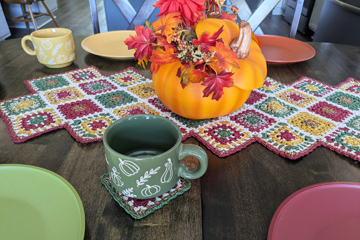
Do you ever look at some yarn or crochet thread in your stash and wonder what you should make with it? I certainly do! May years ago, I bought 4 balls of Curio, a size 10 cotton crochet thread from the Knit Picks website. I absolutely LOVED the colors that I picked out and the price was fabulous for the yardage in each ball! But I put the thread in my stash because I didn’t know what to make from it. So there it sat for many years! Last year, I decided what I’d make from the 4 balls of crochet thread and I’d like to share my new design, “Fall Table Runner and Coasters”, with you.
I tried using the thread single stranded, but I wasn’t really happy with it. I’ve used size 10 cotton crochet threads for many years with great success. However, the Curio isn’t quite the same as other size 10 threads that I’ve worked with. It’s a looser twist, which gives great drape for garments. But I didn’t want to make a garment with it and I wasn’t aiming for drape in my design/project. I only had 1 ball of each of 4 colors and I wanted to make the thread thicker. So I used the Navajo Plying technique where you turn a thin yarn or thread into a thicker yarn or thread (Navajo Plying is a technique that’s used by yarn spinners to make a 3-ply yarn out of one single ply). I’m very happy with how this design turned out and it was a pleasure to use this thread triple stranded!
Have you done any Navajo Plying to make your yarn or crochet thread thicker? It’s a great technique to know! To learn to do Navajo Plying, check out my new YouTube video here.
To purchase my new Fall Table Runner and Coasters pattern, check out the pattern page here.
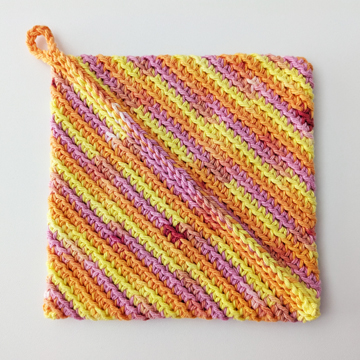
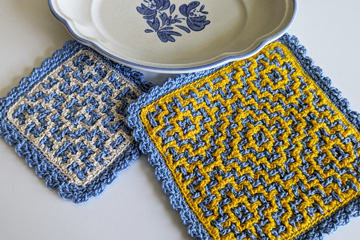
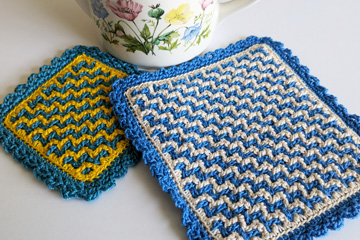
If you’ve never crocheted a Magic Square Potholder before, you’re in for a treat! This pattern is so easy that even a beginner can make it successfully! It’s a quick project to make and the pattern is free on my website here.
I’ve been crocheting these potholders for many years. In fact, I learned to make the Magic Square Potholder before I learned to make the Thermal Stitch Potholder. They’re both fabulous potholders to make and both keep your hands/fingers protected when removing hot dishes from the oven (when made with 100% cotton yarn, which doesn’t melt like acrylic yarn does).
Learn how to make this potholder with the accompanying YouTube video here. If you’d rather use it as a hot pad than a potholder, simply eliminate the hanging loop before seaming the potholder/hot pad closed.
It’s that time of year again! Time for Christmas decorating, singing, spending time with loved ones and crocheted gifts/projects!
These patterns have been many years in the making! I designed these Christmas stockings way back in 2011, but never got around to crocheting them until last year. Now I’m finally publishing the patterns for your enjoyment in decorating your home, too!
Introducing my Mosaic Christmas Stocking patterns. They come in 2 different sizes (large and small), along with the option to purchase both stocking patterns together for a special price.
Each stocking is crocheted in one piece from the mosaic cuff down to the toe. The body of each stocking is worked in a textured stitch pattern with increases and decreases, along with short rows to form the heel and toe.
I used bulky weight yarn for these stockings so they work up in no time!
Check out the patterns today and start crocheting some new Christmas stockings tomorrow! You can find each pattern on the Crochet Patterns “Home Decor” pagehere.
Who doesn’t love a new baby blanket? I certainly do!
These baby blankets have been finished for many years (8-9 years to be exact), but I never got around to publishing them (what can I say except life has been busy)! It’s about time that they’re available for you to make!
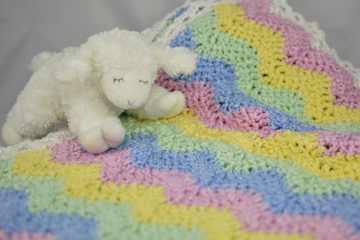
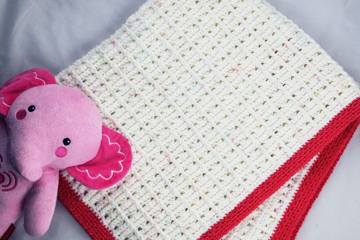
The first is my Snuggly Chevron Baby Blanket. This blanket is super soft and squishy using boucle yarns. I used 2 strands of a light worsted weight yarn for the center and 1 strand of a bulky weight yarn for the edging. If you’ve got both weights of boucle yarns in your stash, this is a great way to use them together! Of course, you don’t have to use boucle yarn. You can use any type of yarn you desire in whatever colors you desire (I personally love soft baby colors).
The second is my Textured Columns Baby Blanket. This blanket is also soft and squishy, but it’s made using sport weight and light worsted weight acrylic yarns. I used a Hobby Lobby yarn for the center and Caron Simply Soft yarn for the edging (I know, it’s not “technically” light worsted weight, but it’s a lot thinner than many other worsted weight yarns, so it worked out just fine).
If you’ve got a baby coming or know someone who has a baby coming, these blankets would make great baby shower gifts! The Snuggly Chevron Baby Blanket is going to my youngest son and DIL for their second child, due next month.
Check out the Snuggly Chevron Baby Blanket here and/or the Textured Columns Baby Blankethere.
After too many months of not blogging, it’s time I got back up on the horse! So here goes.
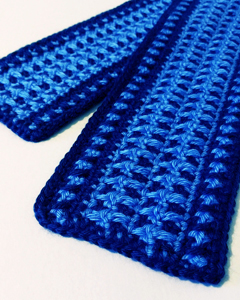
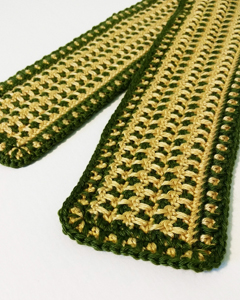
If you’re anything like me, you absolutely ADORE reversible crochet projects, especially scarves! I hate having a wrong (ugly) side on my scarves, so I designed some scarves that are reversible (and a reversible baby blanket, too). Here they are:
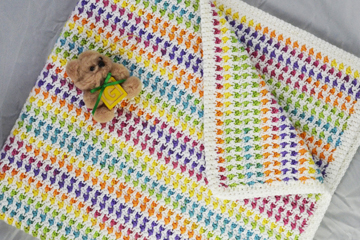
Reversible Stripes Baby Blanket
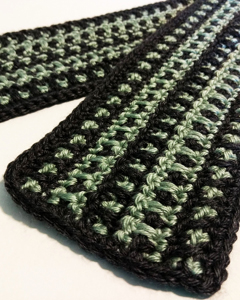
Striped Scarf from Reversible Scarves pattern
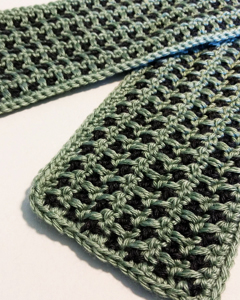
Spotted Scarf from Reversible Scarves pattern
Spots and Stripes Scarf from More Reversible Scarves pattern
Bordered Spots Scarf from More Reversible Scarves pattern
All of these projects/patterns use either worsted weight yarn or light weight yarn (I used acrylic yarns). An H/8 (5 mm) hook or a G/6 (4 mm) hook is used, as well.
All of these projects are worked alternating rows of light color, then dark color, back and forth. However, one of the fabulous points about these patterns is you DON’T finish off each row, leaving lots of tails/ends to weave in! I DON’T enjoy weaving in ends, so when I can design something that has a minimum amount of ends to weave in, that’s a HUGE PLUS in my book! At the end of the row, you simply drop the old color and insert a stitch marker in the last loop to secure it. Then you pick up the opposite color yarn, remove the stitch marker from that loop, turn your work and crochet the next row with the new color. If you’d like to see me demonstrate doing this (and the first 3 rows of these reversible patterns/projects), check out my new YouTube video here.
The Reversible Scarves pattern and More Reversible Scarves pattern both contain written instructions, along with symbol crochet charts, for crocheting 2 different, but similar reversible scarves. All of these scarves are made with 2 contrasting colors of yarn. Check out these patterns, as well as my other crochet accessory patterns here.
The Reversible Stripes Baby Blanket pattern is made with either a multi-color and a solid-color yarn or 7 solid colors of yarn. You can find that pattern, as well as my other baby patterns here.
I hope you enjoy crocheting some reversible projects very soon!
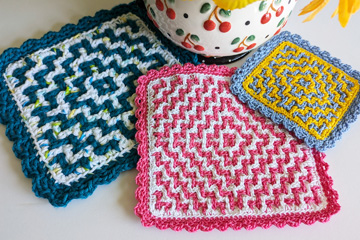
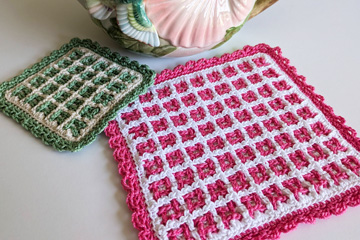
Have you tried Overlay Mosaic Crochet, but can’t quite get it to come out right? Well, there’s a fascinating crochet technique called Woven Crochet. It can look a lot like Overlay Mosaic Crochet, but it’s worked completely differently (and it’s quite fun)! It’s also reversible!!!
I was first introduced to this technique last year when an acquaintance showed me a hot pad/potholder that she had. I was intrigued by it and asked to borrow it. She said “yes” and I proceeded to analyze the hot pad to see how it was made. I found that the woven chains were continuous, not separate for each row, which made for WAY less ends to weave in, which I like!
On and off for the past year, I’ve been playing around with this technique and coming up with new Woven Crochet patterns for your enjoyment. And I decided to make a YouTube video demonstrating how to do Woven Crochet, to go along with the patterns. I’d like to introduce my new Woven Crochet patterns to you.
Persimmon Flower Woven Hot Pad & Coaster
Bullseye Woven Hot Pad & Coaster
Stairstep Woven Hot Pad & Coaster
Squares Woven Hot Pad & Coaster
Check out these new patterns here. If you purchase all 4 patterns, you can receive a $4.00 discount by entering the code “WovenCrochet” at checkout (code is valid indefinitely).
To learn how to do Woven Crochet, watch my free YouTube video.
I hope you enjoy learning this new (to me) crochet technique.
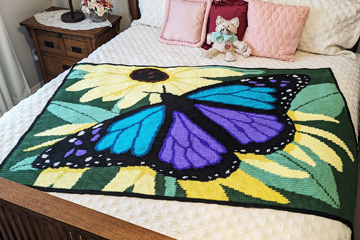
Introducing my Majestic Butterfly Afghan! This afghan was previously published many years ago by Annie’s, but has since been retired. I recently received the copyright back to this beauty, so I wanted to make the pattern available to other crocheters instead of it never being available again!
This beautiful afghan is made in the Intarsia Crochet technique with sc stitches used throughout. Another term that is used for this crochet technique is “graphghan”. In this afghan, the first and last 2 rows are worked in one color (black), but the rest of the rows are worked with color changes throughout. If you’re a fan of kits, the kit is available through Mary Maxim here.
There are at least 2 ways to work the color changes. All ways involve working the last stitch of one color until you have the last 2 loops on the hook like this: “insert hook in next stitch and draw up a loop, drop old color, yarn over with new color and draw through both loops on hook”. The different ways to work the Intarsia technique involve where to drop the old color. One way has the old color dropped to the front of the work, whether you’re working on a right-side row or a wrong-side row. The other way has the old color dropped to the wrong side of the work. That means you’ll be dropping the old color to the back of the work when working a right-side row and to the front of the work when working a wrong-side row.
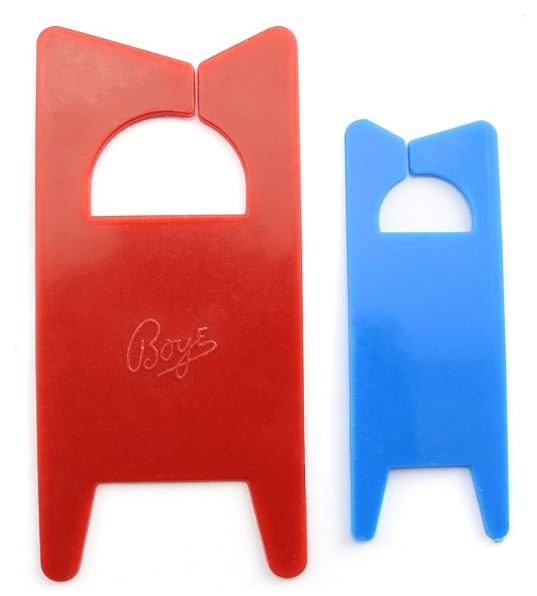
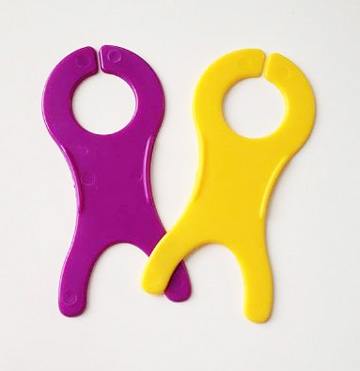
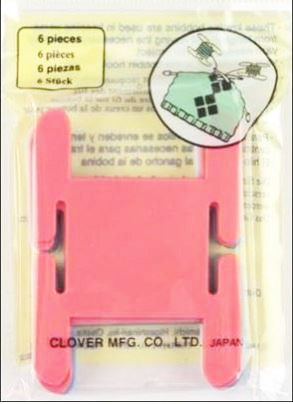
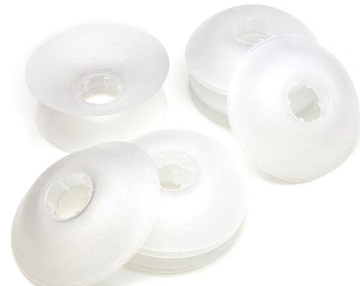
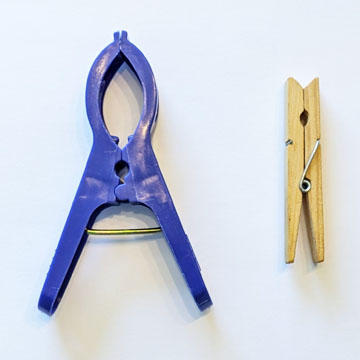
The key to working intarsia crochet (or graphghans) is to use bobbins for each of the separate colors used in the rows. This helps keep the yarns from getting tangled across the rows. The bobbins can be nothing more than a simple DIY type made from cardboard. They can also be made from plastic, coming in many different shapes and sizes. You can also use clothespins of various sizes, made from various materials such as plastic or wood. I found a year or two ago at Dollar Tree. They were $1.25 for 6 of them. They can also be round, encasing the wound yarn inside them. Here are some examples of bobbins used for Intarsia Crochet:
Whichever type(s) of bobbins you use, you’ll need to wind them with the yarn colors you’ll be using. You can wind lots of yarn on each bobbin or figure out the amount of yarn needed for a certain section that will be worked with that color and only wind the amount of yarn you’ll need. The way I figure out the amount of yarn to use is by working a gauge swatch to know the number of sc stitches I get with the hook size I’ll be using. Then I count the number of squares of that color in the section I’ll be working on the chart and divide by the number of stitches I got to come up with the number of yards to wind on that bobbin. I ALWAYS add another 18” – 36” of yarn for wiggle room, as well as leaving a tail at the beginning and end of that section of stitches to weave in and/or work over.
Weaving in the ends can be tedious, but well worth it if done securely. When possible, weave the ends in several directions so they don’t worm their way out when the item is used extensively, like an afghan. ALWAYS weave in the ends in a section of the same color, NEVER in a section of another color!
When working from a chart, each square represents one stitch. If the chart has many rows and many stitches in each row, print out sections of the chart on separate pieces of paper and tape them together. If needed, enlarge the chart to do this. The chart for my Majestic Butterfly Afghan is broken up into 4 “quarter” charts for this purpose (top left, bottom left, top right and bottom right). If the chart was just one chart on the page, the squares would be too small to see accurately. With the chart broken up into 4 charts, the squares are much easier to see, since the squares are larger.
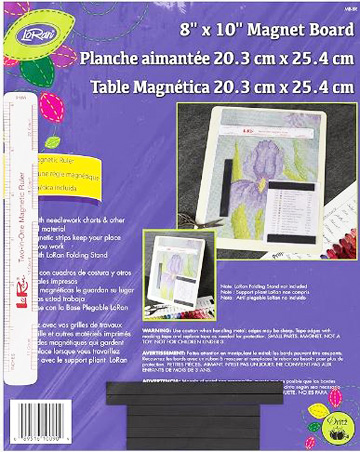
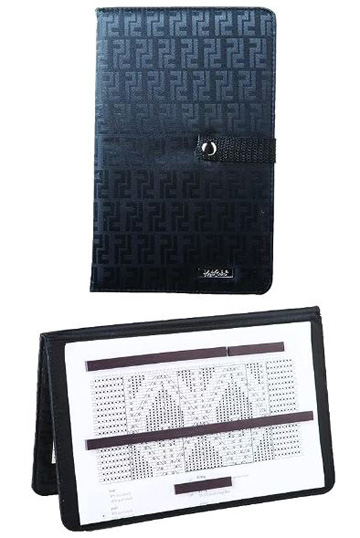
One thing I HIGHLY recommend when following a crochet chart is to use a magnetic board. I’ve used mine for decades now! It’s great to use for all kinds of charted crochet projects and makes it so much easier to keep my place, even on small projects. On large projects like my Majestic Butterfly Afghan, it’s a MUST (in my opinion)! If the chart is too big for the magnetic board, you can mark off the squares/rows that you’ve worked with a sharpie, pen or pencil instead of using the board. I have 2 magnetic boards now and if needed, I could place them side by side to make a larger magnetic board (if working at a table and not in my living room chair, which is where I typically crochet at home). Here are just a few of the styles of magnetic boards available on Amazon:
The Majestic Butterfly Afghan is a large project that can be easier to work at a large table, such as a dining room table or crochet/craft table. It’s easier to work right-side rows while seated at one side of the table and wrong-side rows while seated at the other side of the table, minimizing the need to turn the afghan at the end of each row. Simply move yourself to the other side of the table instead (it’s good to get up and move anyway, so this helps us get some exercise during the project). It also eliminates the need to keep moving the multiple bobbins of yarn and straightening them out across the row! Another option would be to work the afghan at the table on top of a towel. When you finish a row, simply rotate the towel (with the bobbins) so you can work the next row.
Go HERE to purchase the Majestic Butterfly Afghan pattern and get started on your next masterpiece crochet project!
I hope you’ll give Intarsia Crochet a try. Start with a small, easy project and work up to this Majestic Butterfly Afghan or a similar intarsia/graphgan project. You’ll be amazed at what beauty you can create!
If you love Mosaic Crochet as much as me, you’ll really enjoy learning this new technique!
I was introduced to this technique a few years ago by a lady named Stephanie on Ravelry. She had an afghan that was crocheted by her great grandmother in the 1980’s. She couldn’t figure out how it was made and emailed me photos. I looked at them and figured out how the afghan was made. I thought this technique was so unique and fun, so I decided to share it with all of you through some new patterns and a free YouTube video to go along with the patterns.
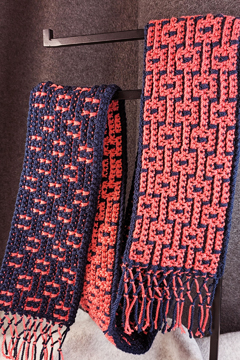
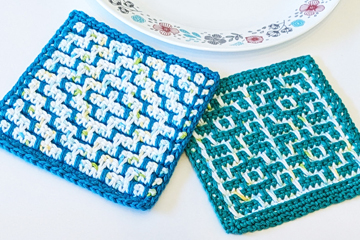
Do you love the look of reversible mosaic crochet projects? I certainly do! I love having projects with two “pretty” sides! And this technique is so much fun! You get a light side and a dark side with this Alternate Spike SC Mosaic Crochet technique.
To learn this new technique, check out my YouTube video.
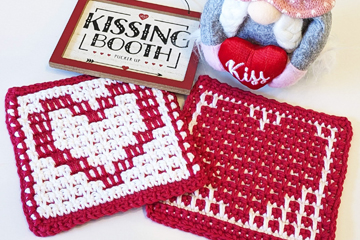
And if you love this technique as much as I do, check out the patterns I’ve created for this fabulous technique! The 3 patterns I’ve created are my “Chain Links Scarf”, my “Geometric Mosaic Hot Pads” and my “Heart Mosaic Hot Pads”. Each of the hot pads patterns actually contains 2 designs for one low price.
I hope you enjoy learning this new Mosaic Crochet technique!
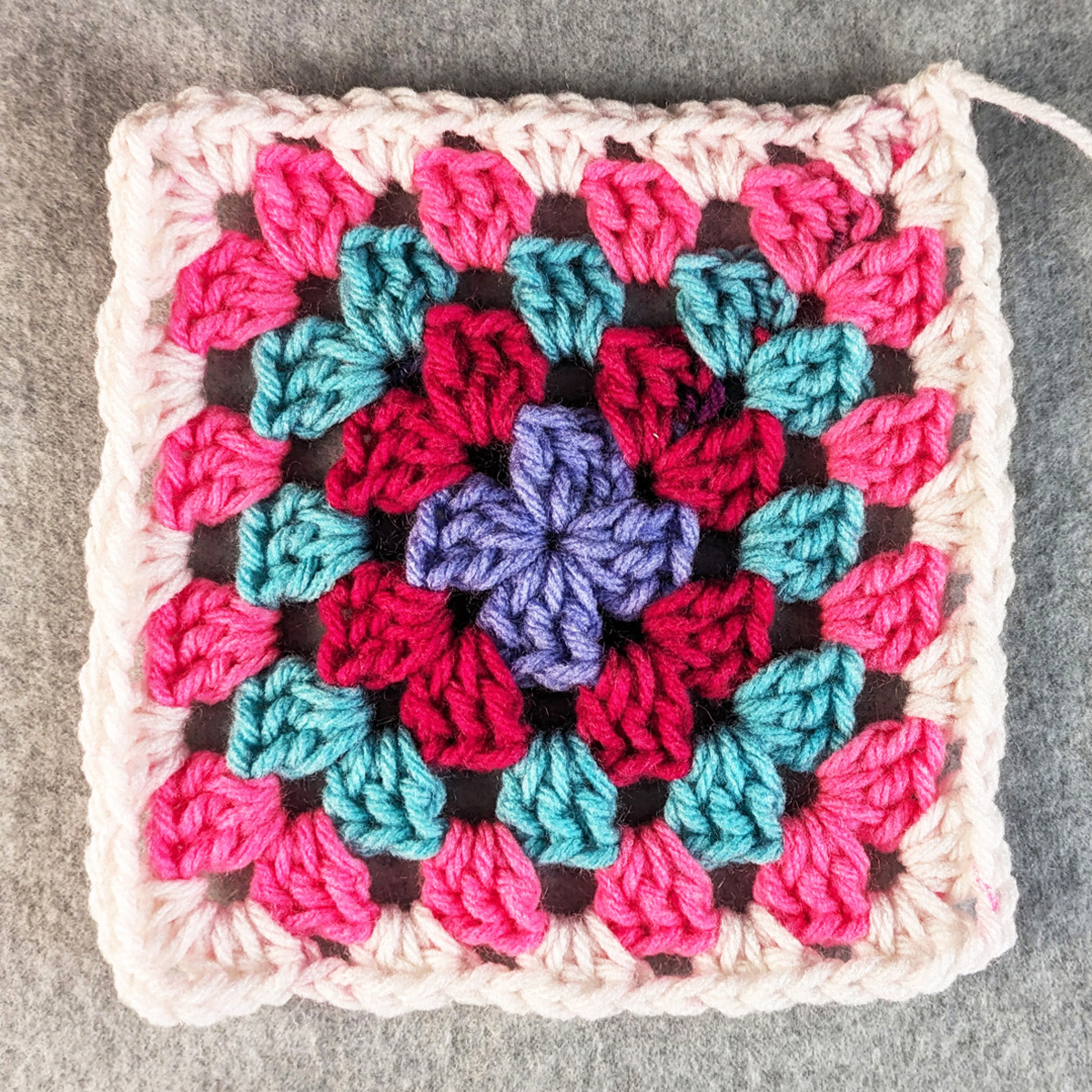
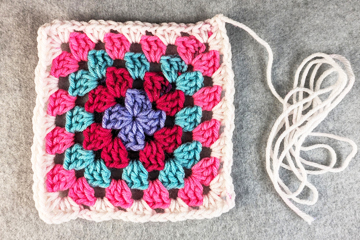
Have you seen the new Red Heart All in One Granny Square yarn? It changes colors at set lengths for each round of a 5-round granny square! I LOVE this idea! I had to buy a skein to try it out for myself! And it works great! Now there are only 2 ends to weave in instead of 10 ends on each 5-round granny square!
I’ve watched quite a few videos on YouTube for using this yarn. I think crocheters either love it or hate it! If you’ve experimented with making taller or shorter stitches, you should do just fine with this yarn. One skein makes 14-15 granny squares (6″ square). That’s enough for 1-2 scarves, depending on the length.
I’ve filmed a YouTube videodemonstrating working with this yarn. I’ve also put together a written, as well as charted, pattern to accompany this yarn. I didn’t like the short length left over after crocheting the granny square per the instructions on the yarn label, so I changed the pattern here and there to create a different granny square. Now I have 3-4 feet of leftover yarn at the end of each square, giving me plenty of yarn to join the squares together! I’m planning to make a scarf with some of these granny squares. And I’ll have more granny squares leftover for another project!
If you’d like a copy of the pattern, it’s available here.
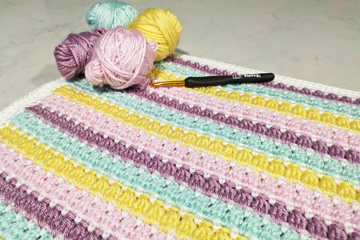
If you’re looking for an easy, quick baby blanket project, I’d like to introduce you to my Easy Clusters Baby Blanket pattern. I started this baby blanket in June of 2020 during a camping trip in Zion National Park with our youngest son and his wife. The pretty colors of the yarn inspired me to design a pattern using the 4 colors of yarn, plus a white.
The pattern is a 2-row repeat with a 2-stitch repeat, as well. That means you can customize the size of your baby blanket (or doll blanket or full-size blanket) with this pattern! You can use the same colors as I did or customize the colors any way you want! This would even make a great scrap-busting project!
I purposely designed the blanket with less ends to weave in by working 2 right-side rows, followed by 2 wrong-side rows. The white (or main color) is carried up the side edge to be used again instead of finishing it off. The contrasting colors are finished off at the end of each row using them (every other row).
This past week, my husband and I filmed aYouTube video where I demonstrate working the blanket from the beginning chain to several repeats of the 2-row repeat in the pattern, including how to work the clusters. I also demonstrate how to carry the main color yarn up the side edge, crochet the edging and weave in the ends securely and professionally. In the video, I made a doll-size blanket to use up some of the scraps of contrasting colors that I had left over from the baby blanket. I think the doll blanket will make a nice Christmas gift for my granddaughter, who turned 7 years old this past summer!
Check out the pattern page hereto see what supplies I used and purchase the low-cost pattern. Get started on your baby blanket, doll blanket or full-size blanket today!