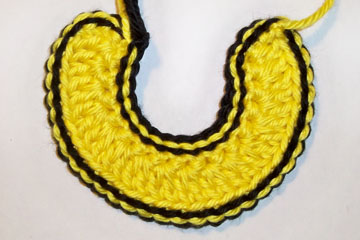
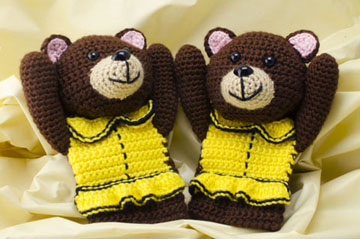
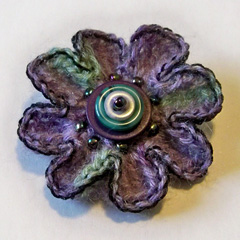
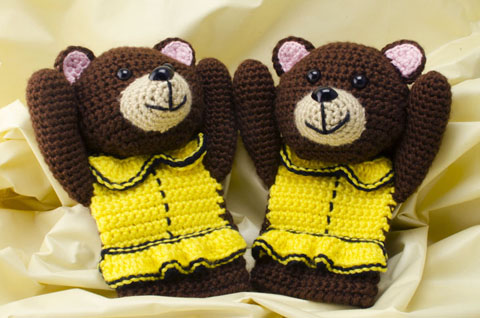
I love the look of decorative edgings, especially when they’re easy and fast to do! I added a decorative edging to the skirt and collar on my Bear Mitts pattern, as well as the edges of my Button Flower Pin pattern.
I LOVE the effect I get when I work this slip stitch edging and it’s super simple to do, too! To find out how to work this edging, check out my new tutorial here.
Have you ever seen a crochet pattern that instructs you to work in the back “bump” (or back “bar” or back “hump”) of the foundation chain? Do you know what part of the foundation chain this is? If you’ve never worked in the back bump of the foundation chain, you’re in for a treat! This is the best thing since sliced bread (well, almost)!
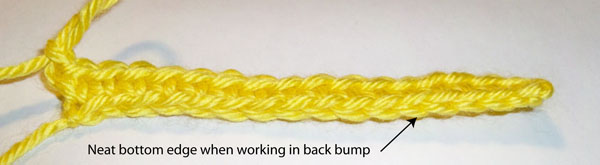
So why would someone want to work into a different loop of the foundation chain than they always work into? In this instance, it is because working in the back bump gives you a nice bottom edge of your project that mimics the top edge of the project. This is what I’m talking about:
Can you see the chain edge at the bottom? Doesn’t that look nice? I LOVE working into the back bump of the foundation chain. Not only does it look nice, it gives a stronger bottom edge, as well.
I’ve made a tutorial for you explaining how to work into the back bump of the foundation chain. You can find it on my “tutorials” page here. I hope you’ll check it out and give it a try. You’ll be glad you did!
I’ve been busy working on more crochet patterns for you. Introducing my newest crochet pattern, “Bear Mitts”. Right now, this pattern is only sized for teens through adults (it’s not available in a child’s size yet, but I’ll work on that as time allows). What teenager or young adult (or “young-at-heart” adult, for that matter) wouldn’t love some adorable bear mitts in their stocking this Christmas? Without further delay, here is my bear mitts pattern for your crocheting pleasure:
Bear Mitts
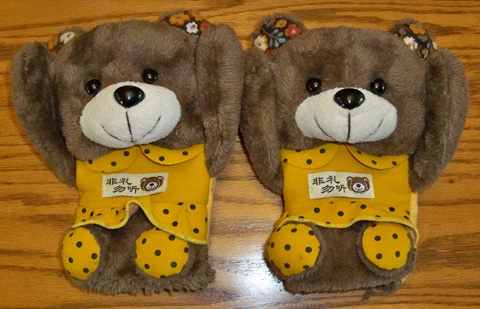
I’d like to tell you a little about this crochet pattern. I got the inspiration earlier this year when my middle son and his wife were here visiting from China. My daughter-in-law brought some adorable bear mitts with her from China and once I saw them, I fell in love with them! Here’s a photo of the original bear mitts from China:
Chinese Bear Mitts design inspiration
Aren’t they adorable? I think they’re so cute! Anyway, I decided within a few minutes of seeing them that I’d design some crocheted bear mitts similar to them. And I’m glad I did.
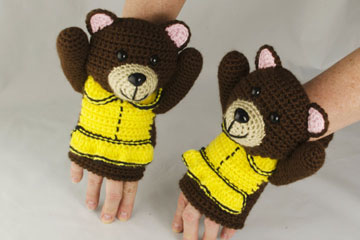
These bear mitts are a lot of fun to make! The head, muzzle and arms are made just like amigurumi pieces and are stuffed to keep their shape. The mitt body piece is made from the top to the bottom with the yellow dress on the front worked at the same time as the brown body. The skirt ruffle and collar are worked separately, then sewn onto the body afterward. The head and ears are separate pieces, too. Because the original Chinese bear mitts had the top of the arms sewn to the side of the face, I decided I’d do this, too, so they don’t flop around while being worn. I didn’t like the way the feet were coming out in crochet, so I decided my crocheted bear mitts didn’t need feet (besides, the fingers sticking out at the bottom can be the bear’s “legs”!). I chose to use safety eyes and noses because I like the look of them, but you could embroider the faces on your bear mitts, if you choose. This is how they look worn:
Bear Mitts worn
They’re really fun to wear! If you don’t care for the yellow dress, you can simply make your bear mitts with a different color of dress (it’s absolutely your choice on that part of the pattern)! And if you’d like to embellish your bear mitts with buttons or bows, I think they’d look great with those, as well (I think a bow at the top of the head or off to one side would be adorable!).
The 16-page written pattern for these Bear Mitts includes many photos of the individual pieces for ease of identification and construction.
As always, if you have a question about one of my patterns, I provide free pattern support for all of my patterns here at The Crochet Architect. I learn as much from my customers’ questions as they do from my answers (and I always welcome questions). That’s how we all learn, right?
If you’re an intermediate crocheter (or an adventurous beginner), I hope you’ll give these bear mitts a try. They’re great for helping to keep your hands and wrists warm! And they’re very stylish, too! You can find the pattern right here for sale on our pattern page.
We all love scarves for keeping our necks warm during the cold winter months! I know I do! But there’s one thing even better than a scarf because it doesn’t fall off easily or become crooked with wear. That item is a “cowl”! If you’ve never heard of a cowl, it’s basically the same thing as an “infinity scarf”, which is a scarf that is joined together at the ends into one big, long tube. There are no ends to be concerned about being straight or even when wearing it. You just put the cowl over your head and wrap it around your neck once or twice, depending on your preference of length and neck warmth! And presto! You have a beautiful and functional accessory to proudly wear or give as a gift. And it’s one of those gifts that doesn’t have to be a certain size, too!!!
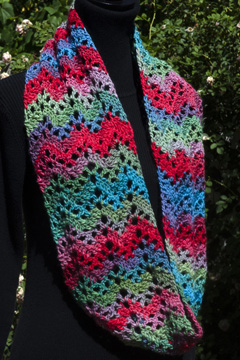
This year, I started designing lots of scarves and cowls, since they’re a lot of fun to crochet and wear (and don’t require sizing!). I recently had my first cowl design published in the Dec. 2014 issue of Crochet World magazine and I have a new cowl pattern for you right here on The Crochet Architect. It’s called the “Unforgettable Ripple Cowl”, named after the Red Heart Boutique “Unforgettable” yarn that I chose for this cowl. This yarn comes in some absolutely “gorgeous” colors! It’s 100% acrylic, so it’s machine washable, which is a big plus for anything you might get dirty (not that I get my cowls dirty, but it could happen and I want to make sure I can get it clean without felting it)! I really enjoy crocheting with this soft, squishy yarn. Anyway, here is my new cowl design:
Unforgettable Ripple Cowl
Aren’t the colors pretty? I chose a ripple stitch pattern for this design because I like the way the changing colors are shown off to their best advantage. It’s also an easy pattern to memorize and crochet, as well as being quick to make! This cowl uses only 1 skein of the Unforgettable yarn, making it an economical project, too. There is only 1 seam to sew to join the bottom and top edges to form the tube-shaped cowl, as well as 2 tails to weave in (that’s not bad considering all the beautiful colors that change on their own!).
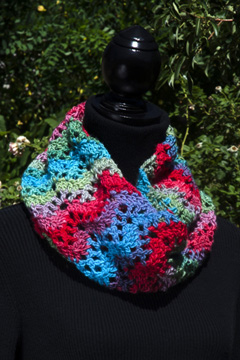
Here’s a photo of the cowl worn doubled:
Unforgettable Ripple Cowl worn doubled
I’m really going to enjoy wearing this cowl during the winter, which isn’t too far off now (we had our first frost on Sunday night, so winter is right around the corner here in the higher elevations of Arizona!).
Have you started any new scarf or cowl patterns lately before winter hits where you live? Do you have someone on your Christmas list who loves scarves and cowls?
To purchase the “Unforgettable Ripple Cowl” pattern, just check out our “patterns” page!
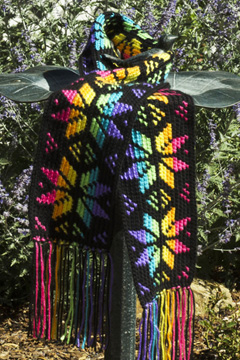
It’s time to get ready for winter and what better way than by crocheting a new scarf! Here, for your crocheting pleasure, is the newest scarf pattern at The Crochet Architect: our “Stained Glass Snowflake Scarf”!
Stained Glass Snowflake Scarf
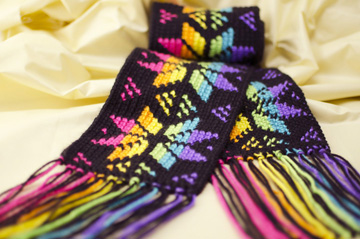
This scarf may look complicated, but it’s not. It is worked in rows of single crochet, all on the right side with color changes. There are long tails at the beginning and end of each row to turn into the fringe when you’re all done crocheting this beauty! And we all know what that means, right? NO TAILS TO WEAVE IN!!! Do I hear a “hallelujah”?
Stained Glass Snowflake Scarf
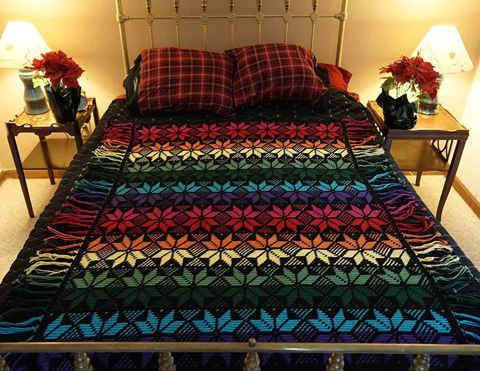
If you’ve seen my “It Takes All Colors Snowflakes” afghan on the Mainly Crochet website and you’re not quite ready to jump into a large afghan project, this scarf is the thing for you. It is worked the same way as my snowflake afghan, but is much faster to make. In case you missed seeing it last month, here is a photo of my snowflake afghan:
It Takes All Colors Snowflakes afghan
As you can see, the afghan and scarf look very much alike, except the afghan has more rows of snowflakes and the scarf has more snowflakes wide (10 snowflakes, to be exact). They’re made the exact same way, which makes it nice. If you like my snowflake afghan and are intimidated by its size, why not try making the snowflake scarf instead. Then when you have the confidence, you can move up to making the snowflake afghan! The snowflake afghan pattern is available on the Mainly Crochet website here. If you haven’t heard of Mainly Crochet, it’s a digital crochet magazine that is available to subscribers. You can get all the information about their service on their website.
So what types of projects are you going to crochet this fall/winter? Are you going to make some afghans or scarves? How about a sweater? It’s a lot of fun to crochet new projects and give them as gifts (for those recipients who appreciate them, of course!).
To purchase the Stained Glass Snowflake Scarf pattern, just check out our “patterns” page!
The winner has been chosen! Congratulations to Pamela, who is the winner of the “Tunisian Crochet for Baby” book giveaway! I know you’re going to love this book!
Thank you to all who entered this giveaway. Stay tuned for more book reviews, giveaways, hints and helpful information about the wonderful world of crochet!
Are you a big fan of Tunisian crochet? I really enjoy the rhythm of this wonderful crochet technique. I enjoy putting the stitches on the hook and taking them off. In my mind, Tunisian crochet is like marrying the best of crochet and knitting! In fact, many of the stitches in Tunisian crochet look just like knit stitches (at least on the right side of the work). If you’ve never tried Tunisian crochet, what are you waiting for? Why not give it a try today?
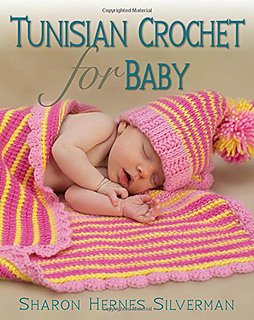
I recently came across a new Tunisian crochet book with baby patterns in it. It’s called “Tunisian Crochet for Baby” by Sharon Hernes Silverman. The book is published by Stackpole Books and retails for $21.95. It has 140 pages with 23 patterns, along with instructions and step-by-step photos for working basic crochet stitches, as well as Tunisian crochet stitches. There are projects for every skill level, too. I recommend this book if you’ve done Tunisian crochet before and are looking for some really cute Tunisian crochet baby projects to make. There are blankets, hats, a pullover, pants, a headband, mittens, a hoodie, a skirt, a poncho, a turban, a nursery box, washcloths, a cocoon, as well as a christening gown, bonnet and booties. Here are some of my favorite projects from this book:
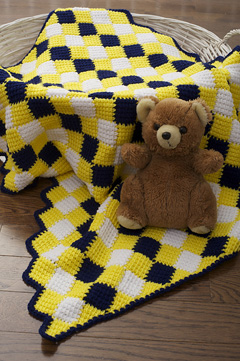
Harlequin Blanket
This is the Harlequin Blanket. It is worked in the entrelac method of making squares and attaching the new square to the previous square as you go, so there are no seams involved. I’ve seen this technique before, but I’ve never tried it. I intend to do that one of these days because it looks like it would be relaxing to make, but have enough interest to hold my attention!
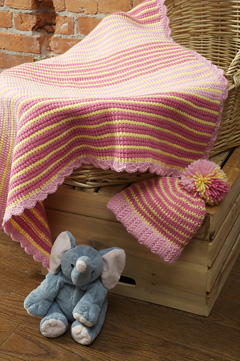
Sherbet Stripes Blanket and HatSherbet Stripes Hat
This is the Sherbet Stripes Blanket and Hat. I LOVE the colors in this set! And I also love how the hat is made with Tunisian knit and purl stitches, which look just like a knitted hat! The blanket is made with Tunisian simple stitch and edged with crocheted shells. I’m looking forward to learning to decrease stitches in Tunisian crochet by making this baby hat someday soon!
Washcloth Quartet
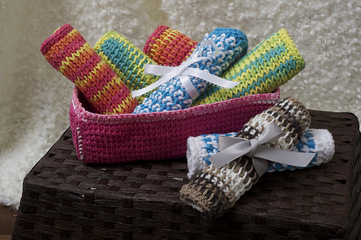
This is the Nursery Box filled with the Washcloth Quartet (4 different washcloths). I LOVE quick projects, and these washcloths are just that. They’d make great baby shower gifts for any mother-to-be!
Besides the wonderful projects, another thing I really like about this book is the charts showing which stitches are worked in each row or round. I’ve never seen Tunisian crochet charts before (or never really noticed them). I really like being able to see visually what the written instructions are saying to do!
So if you’re looking for a really nice book with Tunisian crochet projects to make for babies, I hope you’ll consider adding this book to your crochet library! You can check out all the projects in the Look Book that Stackpole Books has on their website here. The book is available in paperback or as an ebook in pdf format through Stackpole Books here or as a printed book through Amazon here.
As a bonus for this blog tour, I’m having a giveaway for a pdf download of this book. The giveaway runs through October 8th. To enter the giveaway and receive a complimentary, instant pdf download of this fabulous book, simply leave a comment on this blog post to be entered. The lucky winner will be randomly drawn and announced on October 9th. Good luck and happy crocheting!
What do you like most about crochet? Are you someone who loves the textures that you can make in crochet with a solid color of yarn? I definitely do! One of the crochet techniques that uses a lot of crochet stitches with texture is Celtic crochet.
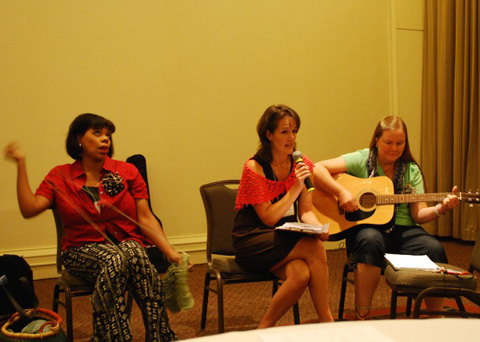
I’d like to share some information about a book that I recently got by Bonnie Barker, who I met at the CGOA Conference this year in July. Bonnie is a sweet person and has a lot of talent, both in crochet and in music. Bonnie wrote the lyrics for a song called “Ripping Out is Hard to Do” that she, Jennifer Ryan (another crochet designer) and Terri Mitchell (Bonnie’s neighbor) performed at the conference this year. Here’s a photo of the 3 of them performing this song:
From left to right: Terri, Jennifer and Bonnie
The song was a “riot”!!! Bonnie wrote the parody lyrics, which were sung to the tune of “Breaking Up is Hard to Do” by Neil Sedaka. As you can see in the photo, Bonnie played the guitar, Jennifer sang the song and Terri did the silly acting out of the words. What a hoot!!!
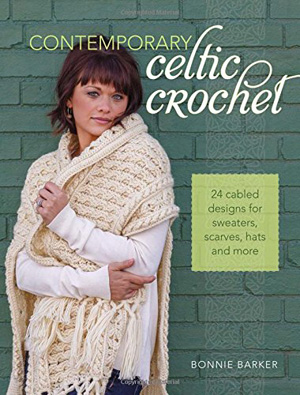
Now back to some crochet seriousness! Bonnie has a new crochet book this year called “Contemporary Celtic Crochet”, published by Fons & Porter Books (an imprint of F&W). Here’s a photo of the front cover of the book:
This 128 page book retails for $24.99 in the US and contains 24 designs, from scarves to sweaters, vests, baby blankets, sweater wraps and much more. I’ve never seen a sweater wrap before and perhaps you haven’t, either. I’ll explain what a sweater wrap is later on in this blog post. But for now, I’d like to tell you a little about this book and share photos of my favorite designs in it with you so you can decide if this book is something you’d like to add to your crochet library.
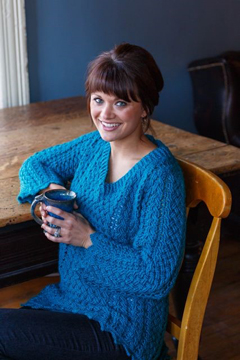
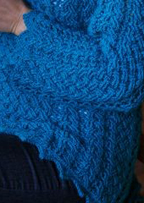
One of my favorite projects in this book is the Kells Cabled Sweater. It’s a V-neck sweater with a beautiful edging along the bottom of the sleeves and sweater. The sleeves are loose and comfortable looking in the photo. See for yourself:
Doesn’t this look like a comfortable sweater? It definitely does to me!
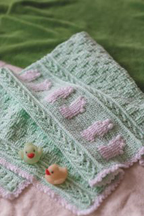
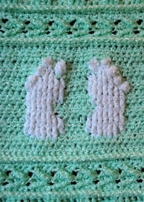
Here are a few photos of another one of my favorite projects in this book:
This is the Baby Feet Baby Blanket. Aren’t these baby feet adorable? I don’t think I’ve ever seen baby feet on a baby blanket like this before! This is a pattern that I’ll definitely be looking closer at when my grandchildren start arriving (hint, hint!).
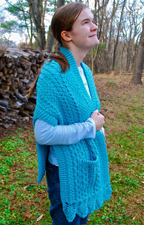
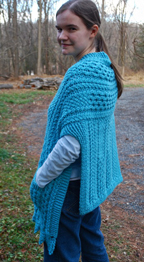
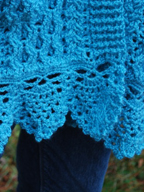
Okay, so what is a sweater wrap? According to Bonnie’s book, she first saw this style of garment while visiting the west coast of Ireland. Bonnie says in the book, “A sweater wrap is a wrap that thinks and acts like a sweater. It is a practical choice when you don’t want to wear a sweater, yet a stole alone is just not quite warm enough. The added back panel attached to the stole keeps you just as warm as you want to be.” Here are some photos of one of the 4 sweater wraps in the book, modeled by one of Bonnie’s daughters:
I think the bottom edging on this sweater wrap is really nice! Each of the 4 sweater wraps is made with different Celtic Crochet stitches. They’re all very nice and don’t require any shaping, like sweaters do, so they’d be much easier to crochet.
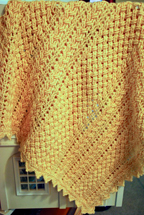
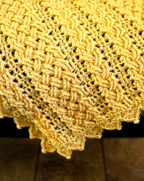
Here’s the other baby blanket in this book:
This is the Hialeah Honey Baby Blanket. It sure has LOTS of texture!!!
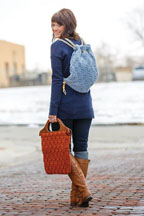
And here is the backpack and purse, which I really like, too:
The backpack and purse have a basket weave pattern to them.
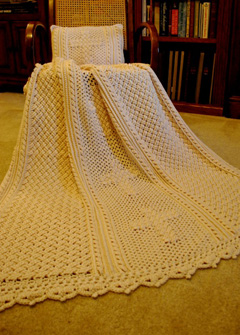
Bonnie even included a Celtic Cross Afghan in the book. Here is a photo of that afghan (and a coordinating pillow right above it) with a lot of texture, as well:
This is a really nice looking afghan and I love the edging on it, too! Since I’m a Christian, this afghan has a lot of meaning to me.
Unfortunately, I can’t show you photos of all the projects in this book. But I can tell you that there are 36 pages of instructions and step-by-step photos of how to crochet the special stitches and Celtic stitches in this book. These stitches include the arrow, baby feet toe popcorns, back post and front post double crochet, back post and front post treble crochet, basket weave, braided cable, buttonholes, cable, Celtic cross, Celtic weave, diamond, honeycomb, knotted fringe, knurl, low back ridge, low front ridge, popcorn, front post and back post ribbing, shadow box, shell with picot, single crochet ribbing, wheat, woven and more! These stitch instructions are fabulous!!!
Bonnie and her husband, Craig, traveled to Ireland on a business trip in 2012. The inspiration for Bonnie’s designs in this book came from that trip. Here is a photo of Bonnie and Craig in Ireland:
Bonnie also included some photos in her Celtic Crochet book of places in Ireland that she and Craig visited on their trip. It looks like a beautiful country!
I hope you’ve enjoyed this look at “Contemporary Celtic Crochet”. You can see and purchase the book on Amazon here or through Interweave here. To read about Bonnie and follow her designing career, check out her website here.
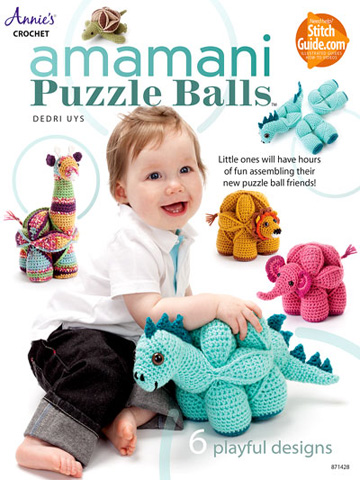
Have you seen the new Annie’s book called “Amamani Puzzle Balls” by Dedri Uys? I couldn’t resist adding this book to my collection! Here’s a photo of the front cover:
Amamani Puzzle Balls book front cover
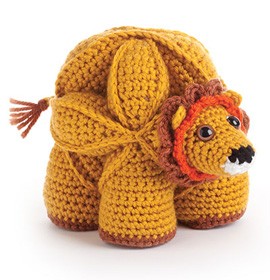
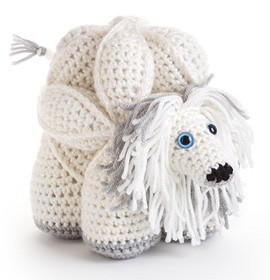
I LOVE this book! It has the cutest crochet animals I’ve seen in a long time! There are 6 designs to make from this book and they’re all absolutely adorable! Each one is made up of 3 pieces that fit together like a puzzle. I can’t wait to finish up some designs for publication so I can make one of these adorable animals for a future grandchild, since my kids are all grown up and out of the house! I’m a puzzle lover and a crochet lover, so marrying these two loves is right up my alley! Let me show you the 6 animals in this book.
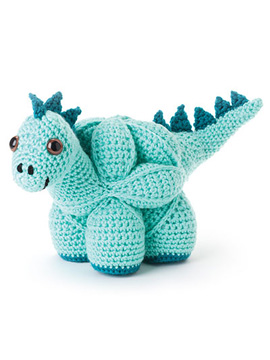
Dexter the Dinosaur
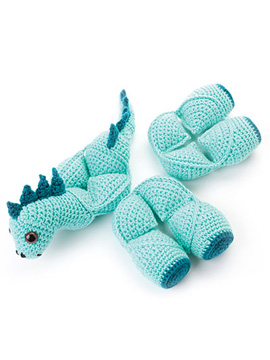
This is Dexter the Dinosaur. Isn’t he cute? This is what he looks like taken apart into the 3 pieces I was telling you about:
Dexter the Dinosaur pieces
It’s hard to tell exactly how to put him back together, isn’t it? To see how that happens, you can watch the video on the Annie’s website showing the puzzle ball coming apart and going back together again here.
This is the description of the book, directly from the Annie’s website:
“Amamani is short for Amigurumi Amish Puzzle Animals. They are based on the traditional Amish puzzle ball and, as such, come apart into three segments or rings, which have to be assembled to form the animal. Gauge isn’t important in these projects. However, it is important that you work as tightly as you comfortably can. Helpful tips and step-by-step photos are included. Each of the six projects are made using Deborah Norville Everyday worsted-weight yarns. Projects include a dinosaur, elephant, giraffe, turtle and two versions of the lion.”
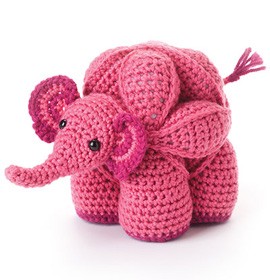
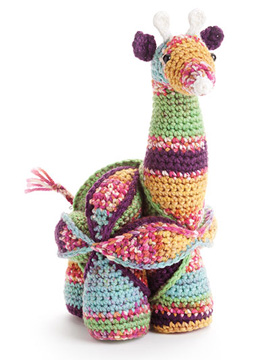
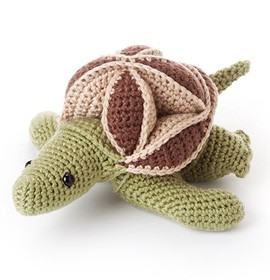
Here are photos of the other 5 animals in this book:
Eleanor the ElephantGemina the GiraffeSkillie the TurtleBrill the LionWhite Lion
There are 62 pages in this book. The first 15 pages are instructions and photos for making the basic pieces of the animals. This book has written instructions and lots of step-by-step photos to show you how each of these animals is crocheted and put together, which is very helpful, since they’re somewhat complex to make! I’m looking forward to making one of these very much (as soon as I get some free time)! The book retails for $10.99 and can be purchased on the Annie’s website here.
I hope you’ve enjoyed this look at “Amamani Puzzle Balls” as much as I’ve enjoyed looking at the book. I’m itching to make one of these toys, aren’t you?
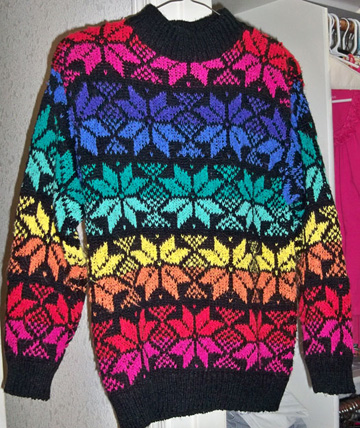
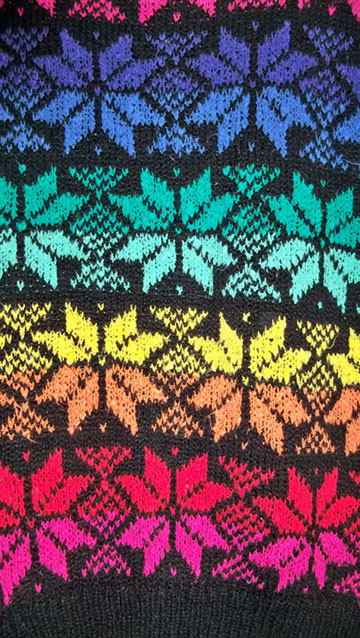
Have you ever wondered where designers get the inspiration for their designs? Well, inspiration comes from many places. For me, it can come from seeing something in a store, on a website or in a book. It can also come from seeing a garment or accessory that someone is wearing. My newest design, “It Takes All Colors Snowflakes” afghan, was inspired by a knitted sweater in my own closet! I don’t always get inspired by my sweaters, but this sweater was truly inspiring to me! It’s an older sweater and has seen its better days, especially around the bottom of the sleeves. But I love the snowflake pattern on it and the bright colors that were used, so I knew I had to use this design in a crochet pattern someday. Here’s a photo of the sweater (and a close up photo of it) for you to see:
Snowflake Sweater inspirationClose Up of Snowflake Sweater
Here are photos of my snowflake afghan to compare to the sweater:
It Takes All Colors Snowflakes afghan
Close Up of Snowflakes afghan
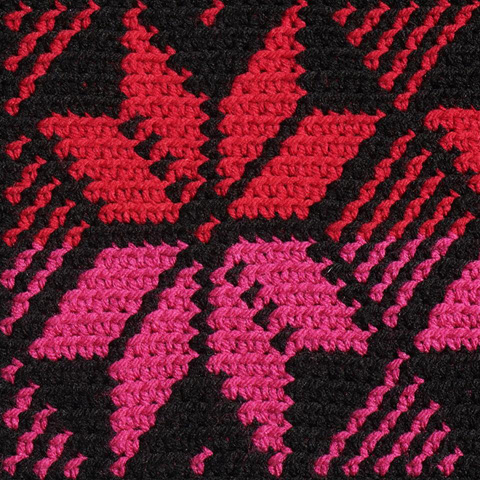
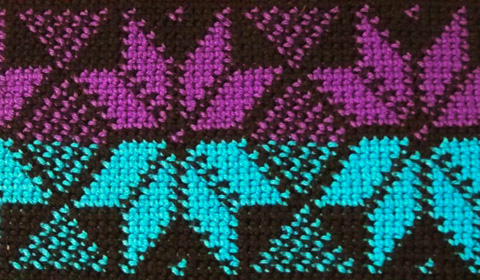
I used 8 colors (plus black) of Red Heart “With Love” yarn to make this afghan. It’s worked in the Fair Isle crochet technique in which each row is worked on the right side. The tails are all turned into fringe on the left and right edges afterward, so there are no tails/ends to weave in (yahoo!). Fair Isle crochet is a great technique that yields a fabulous finished design! And since the non-working color is worked over instead of being carried across the back, the afghan is reversible, too! Here is a close up photo of a section on the back of the afghan to see:
Back of Snowflake Afghan
You can find this pattern on the Mainly Crochet website here. If you’re not familiar with Mainly Crochet, it’s an online magazine started by Michele Maks, the former editor for Crochet World magazine. I met Michele in person at a CGOA Conference (possibly in 2009, but I could be wrong about the year!). Michele purchased quite a few of my crochet patterns during the years that she was the editor of Crochet World! She started out as a designer several decades ago, before she was the editor for Crochet World magazine. She’s a fabulous designer and a great magazine editor with a keen eye! A few years after leaving Crochet World, Michele decided to start her own online magazine called “Mainly Crochet”. The Mainly Crochet website went live in the summer of 2013 and has been going strong ever since! It is a subscription magazine that costs $24 per year. There are over 190 patterns on the website now. They’re all accessible to paid subscribers to download as PDF files onto their computers or tablets. Mainly Crochet has a lot of fabulous patterns by many talented designers! There are patterns for all skill levels and for all types of projects: from afghans to accessories to doilies and lots more! Check it out!
I hope you’ve enjoyed this look at the inspiration behind my “It Takes All Colors Snowflakes” afghan design and will give this crochet technique a try.